A change management approach in four steps
Geert Barandat · updated 26 September 2026
A change management approach for organizational change (OCM) does not need to be a thick playbook. In Cohentis the compass brings your change on course in four connected steps: from the why and direction with your steering committee, through the stakeholder map that points to your design group, to the dashboard you steer by together. Not theory, but the way it actually gets done.
Step 1 · Sharpen the change
You start with the question of why this project exists, together with your sponsor. What happens if we do nothing, which actions avoid that negative impact, and why does this matter to the organisation. Here you also decide your core team, the steering committee that carries the why and the direction. They give the first input for your stakeholder map right away.
The full approach to the why is on the shared vision page. In short: this is the foundation the rest rests on, and it should be clear before you bring the steering committee together in a workshop.
Step 2 · From positions to a supported vision
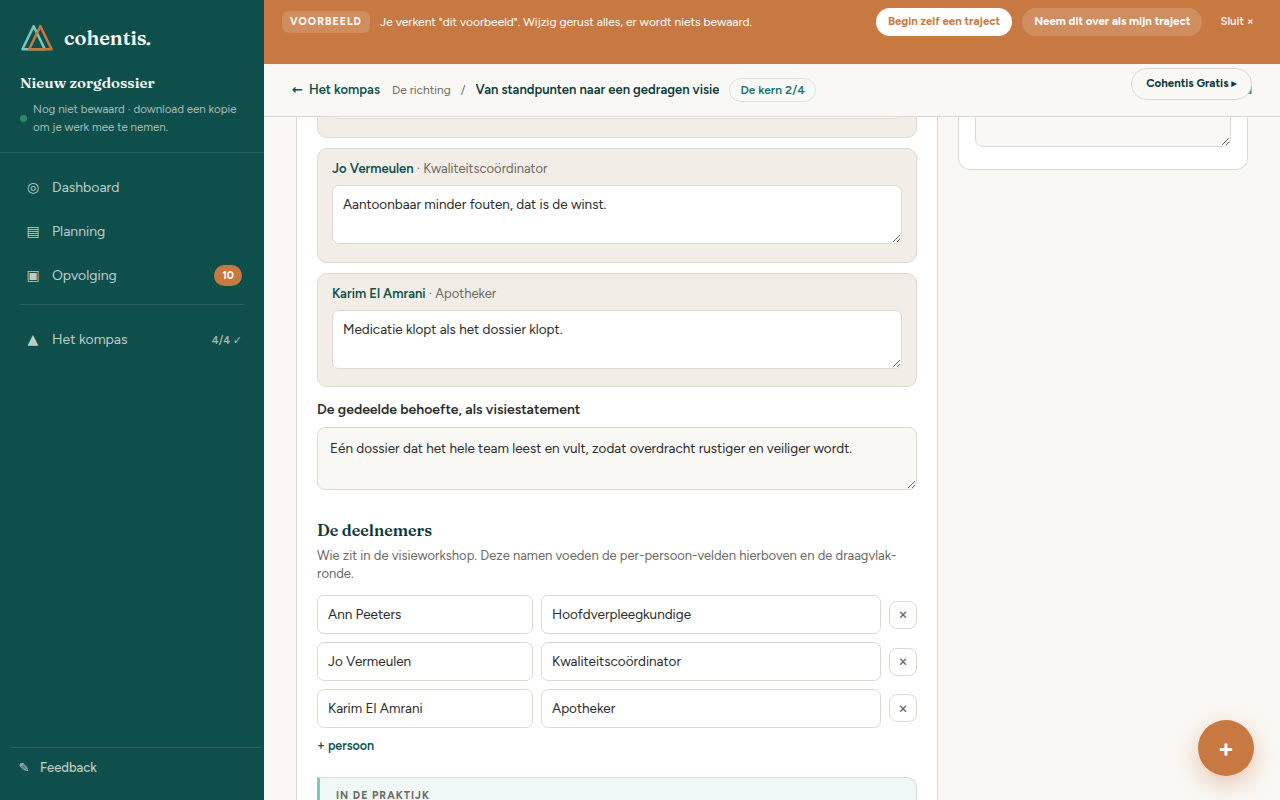
In a workshop you draw out what the project means to each participant. IT wants to deliver faster, Finance wants to cut cost, HR wants a stronger employer brand. You want those nuances on the table, and participants need to hear them from each other. From those interests grows the shared need that becomes the core of your vision statement, carried by everyone, each with their own accent for their own department. That vision statement will sit at the top of your dashboard.
 Click to enlarge
Steps 3 and 4 · Measurable criteria and the stakeholder map
In the third step you make the vision measurable: what does success look like, when is the project done. Participants take ownership of their metrics, and together you set interim measurement points on the planning. Those metrics form the north star on your dashboard, below the vision statement. The fourth step is the stakeholder map: it starts from the first input of your steering committee, and points to who forms your change design group. People who represent their constituency, stand closer to practice, and want to act as change agents.
In Cohentis you steer together
 Click to enlarge
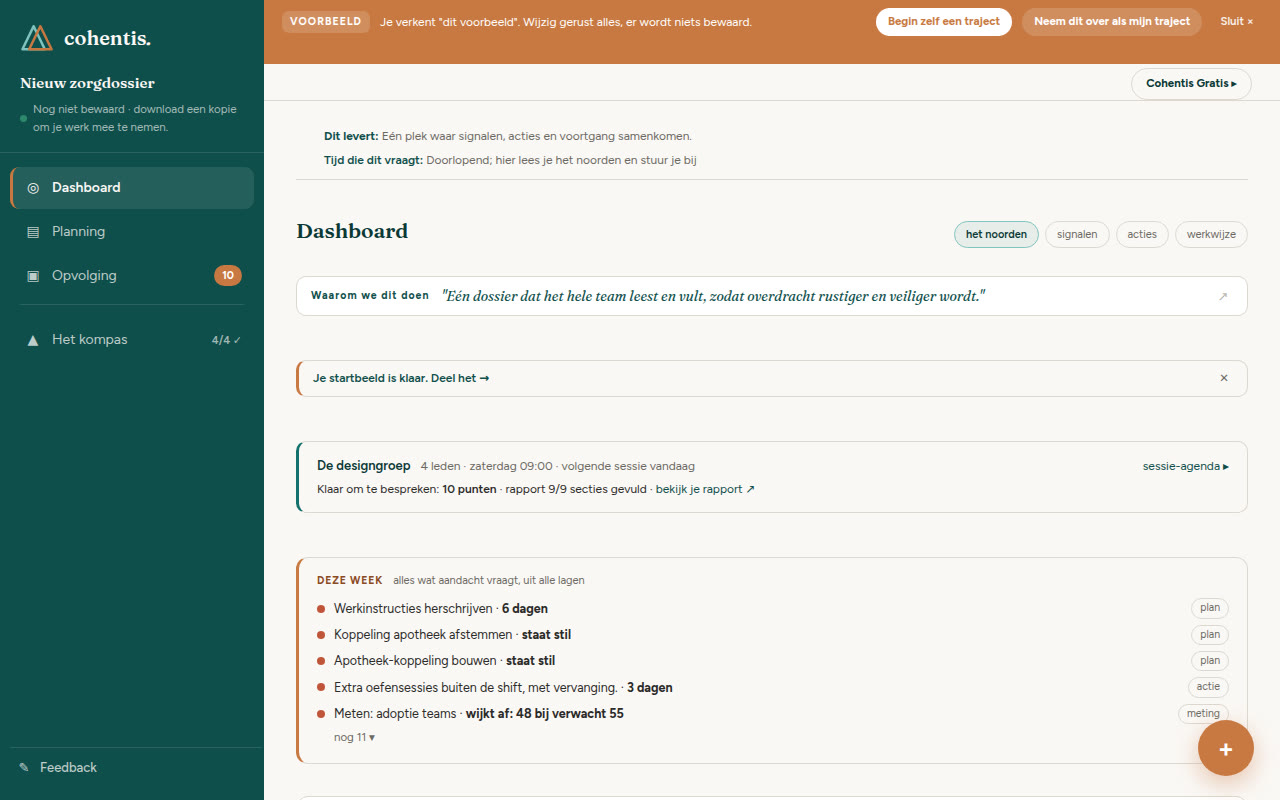
Cohentis (opens in a new tab) holds the four steps together. The vision statement from step 2 sits at the top of your dashboard, above the north star with the metrics from step 3. From your stakeholder map you link conversations, actions, missions and risks, which come together in your follow-up. It is with your change design group that you review this dashboard periodically: what needs attention, which metrics are moving, where to steer to deliver the why. That way organizational change management (OCM) is not a document that falls quiet after the kickoff, but a living practice you steer together.
Common questions
What is a change management approach?
A change management approach brings the core of your change on course in four connected steps: sharpening the change, moving from positions to a supported vision, translating vision into measurable success criteria, and the stakeholder map. Together they set the why, the direction and the people who carry the change.
What is the difference between the steering committee and the design group?
The steering committee sets the why and the direction, and gives the first input for the stakeholder map. The change design group follows from that map: people who represent their constituency, stand closer to practice, and act as change agents. With the design group you review the dashboard periodically to steer.
How do the four steps connect?
They form a chain. The steering committee sets the why and direction through the first three steps. The stakeholder map, the fourth step, points to who forms the design group. With that design group you realise the change, and steer through the dashboard, where the why sits on top and the metrics below.